
Spine & Pelvis
Cervical, thoracic, lumbar, pelvic, and rib motion may be assessed based on your symptoms, movement, and clinical findings.



Chiropractic Adjustments
Hands-on chiropractic adjusting focused on improving joint motion, reducing restriction, and helping your body move better.
At Windy Ridge, the adjustment is selected for the person in front of us—not applied as a one-size-fits-all routine. Your comfort, goals, history, movement, and clinical findings guide the approach.
Understanding the technique
Diversified adjusting is a hands-on chiropractic approach used to address joint restriction in the spine, pelvis, and extremities.
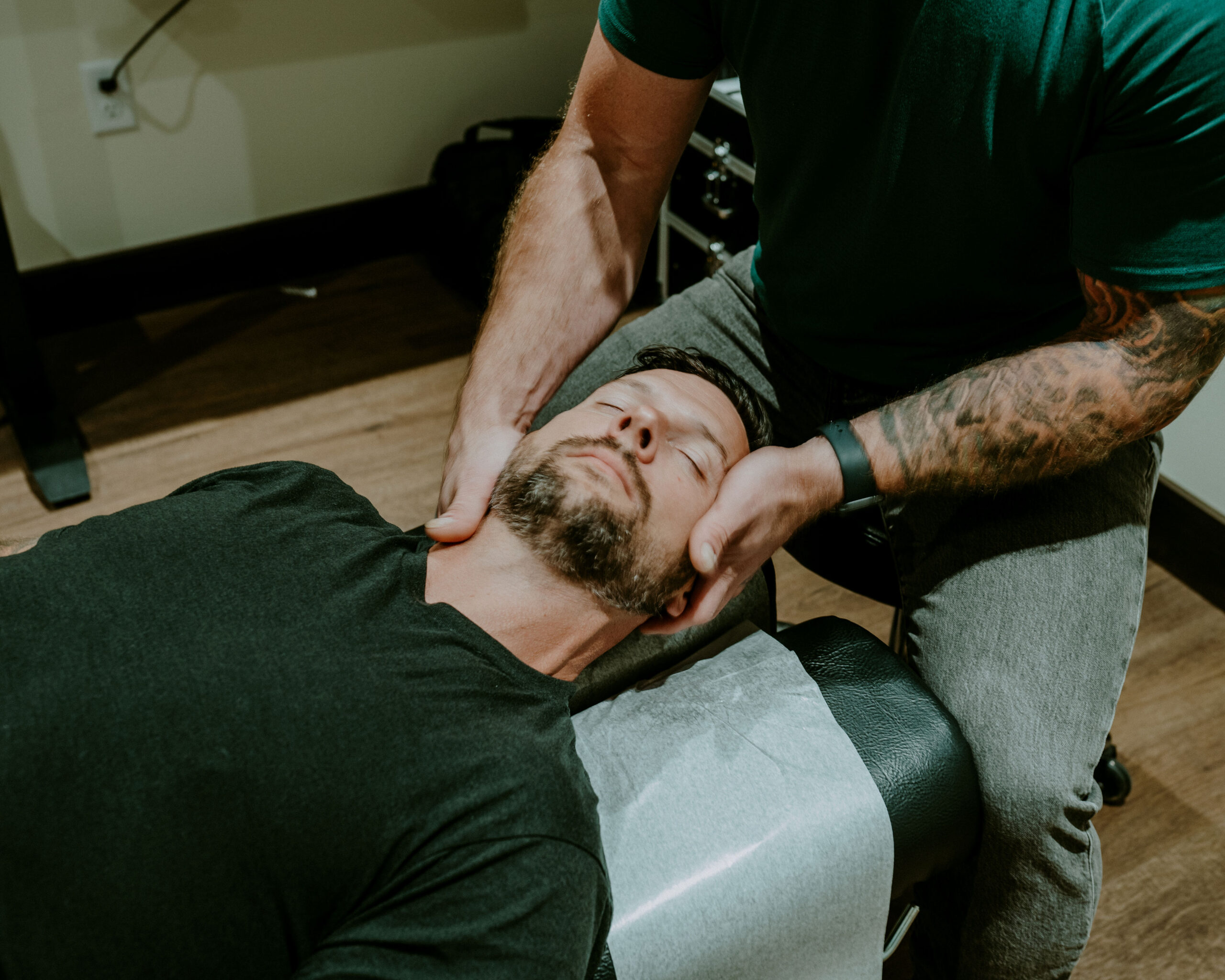
A diversified adjustment uses a carefully directed manual force to help a joint move through a restricted range. The exact position, contact, direction, and amount of force can change based on the area being treated and the patient’s comfort.
Before adjusting, your chiropractor reviews your history and assesses movement, tenderness, joint motion, and other relevant findings. An adjustment is recommended only when it fits the clinical picture.
Windy Ridge draws from several hands-on approaches within diversified care so the visit can be adapted to different body types, activity levels, sensitivities, and goals.
More than one region
The area that hurts is not always the only area worth evaluating. Your provider may assess connected regions that influence how you move.
Cervical, thoracic, lumbar, pelvic, and rib motion may be assessed based on your symptoms, movement, and clinical findings.
Shoulder, elbow, wrist, and hand motion may matter for work, lifting, throwing, climbing, or other upper-body demands.
Hip, knee, ankle, and foot motion may be considered for walking, running, training, and everyday movement.
A patient-matched approach
Your provider adjusts the plan as your comfort, movement, and response change.
Your visit begins with your history, goals, movement, and a focused examination of the areas that may be contributing.
Position, contact, speed, and force are selected according to the joint, your comfort, and the clinical findings.
Your provider checks how you move and feel afterward, then explains useful next steps for your care.
What a visit may look like
An adjustment may be one part of a broader visit rather than the entire plan.
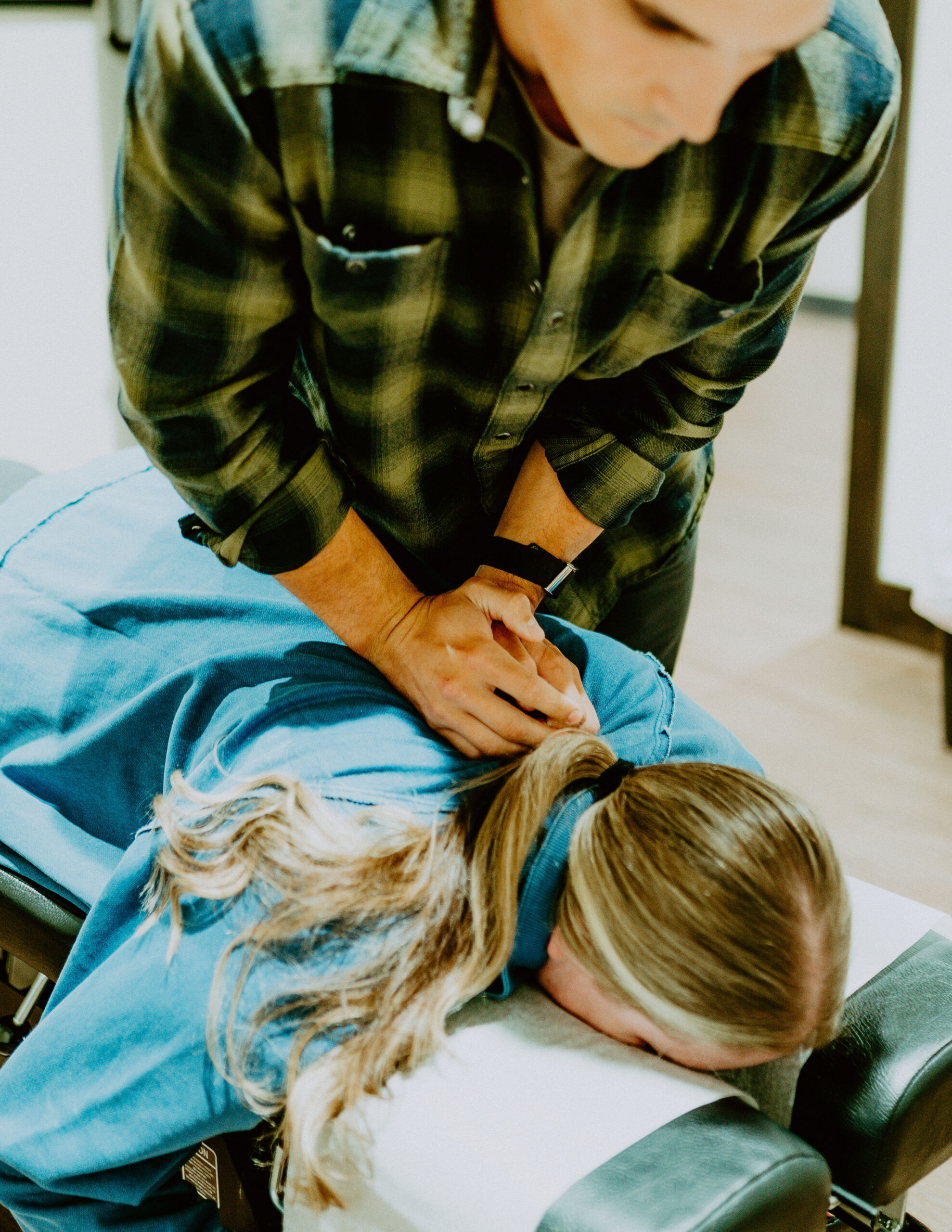
Your provider explains the recommended setup and gives you a chance to ask questions before treatment. You may hear a joint release, but sound is not the goal and does not determine whether an adjustment was useful.
When muscle tension or tissue restriction limits comfortable movement, an adjustment may be paired with dry needling, cupping, IASTM, trigger-point work, or movement guidance when clinically appropriate.
The plan can be modified if a position is uncomfortable or if a different approach better suits your preferences and findings.
Care across the body
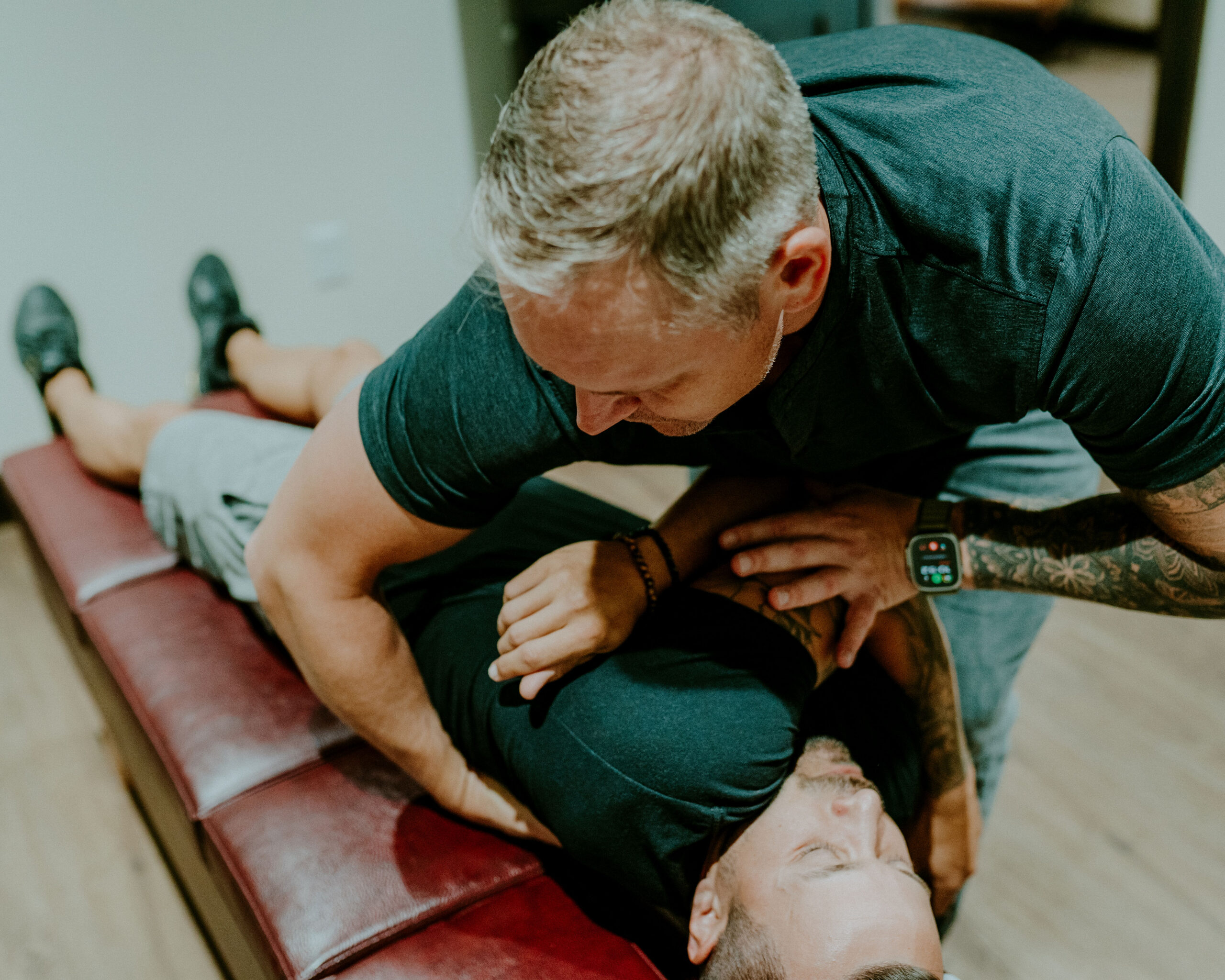
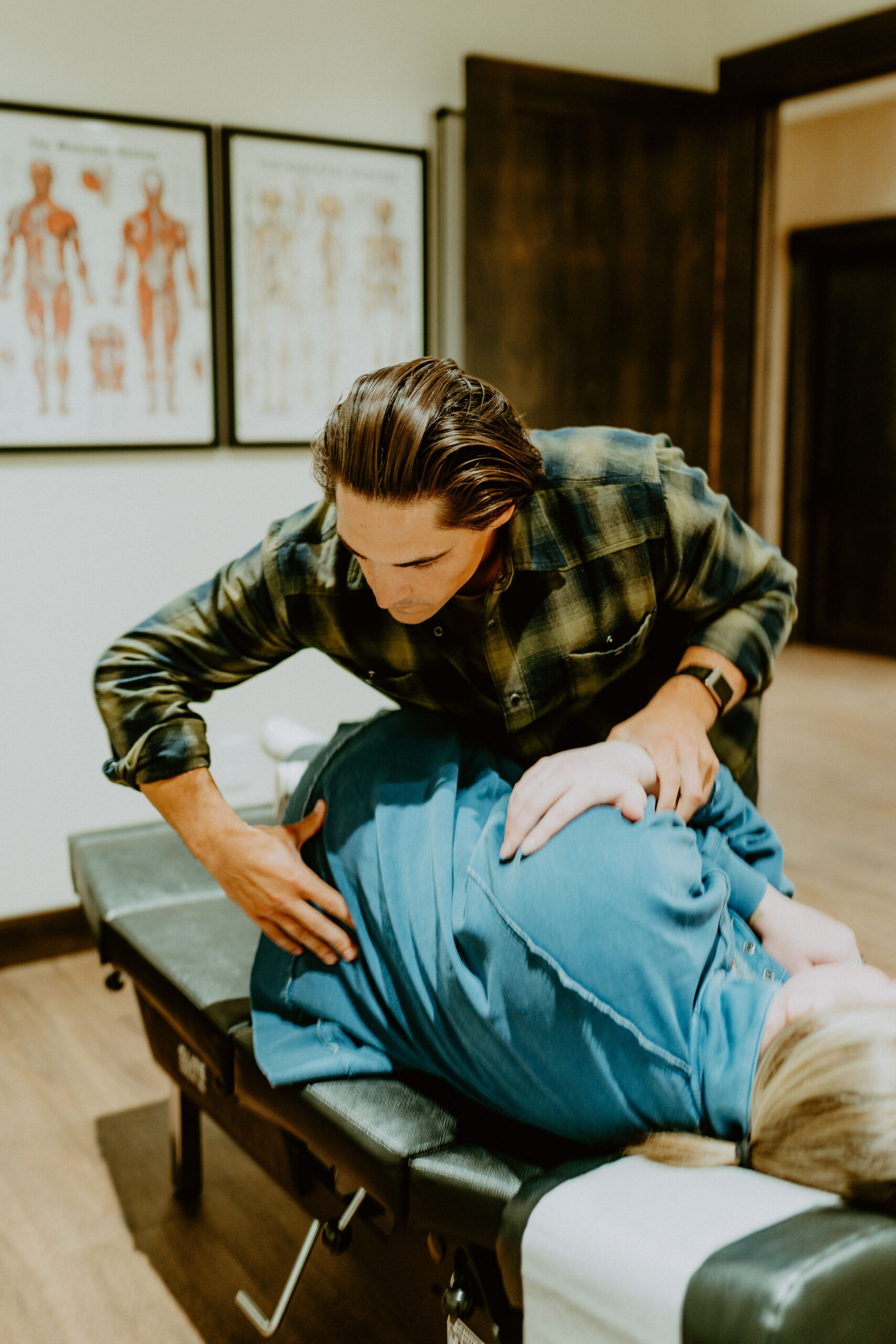
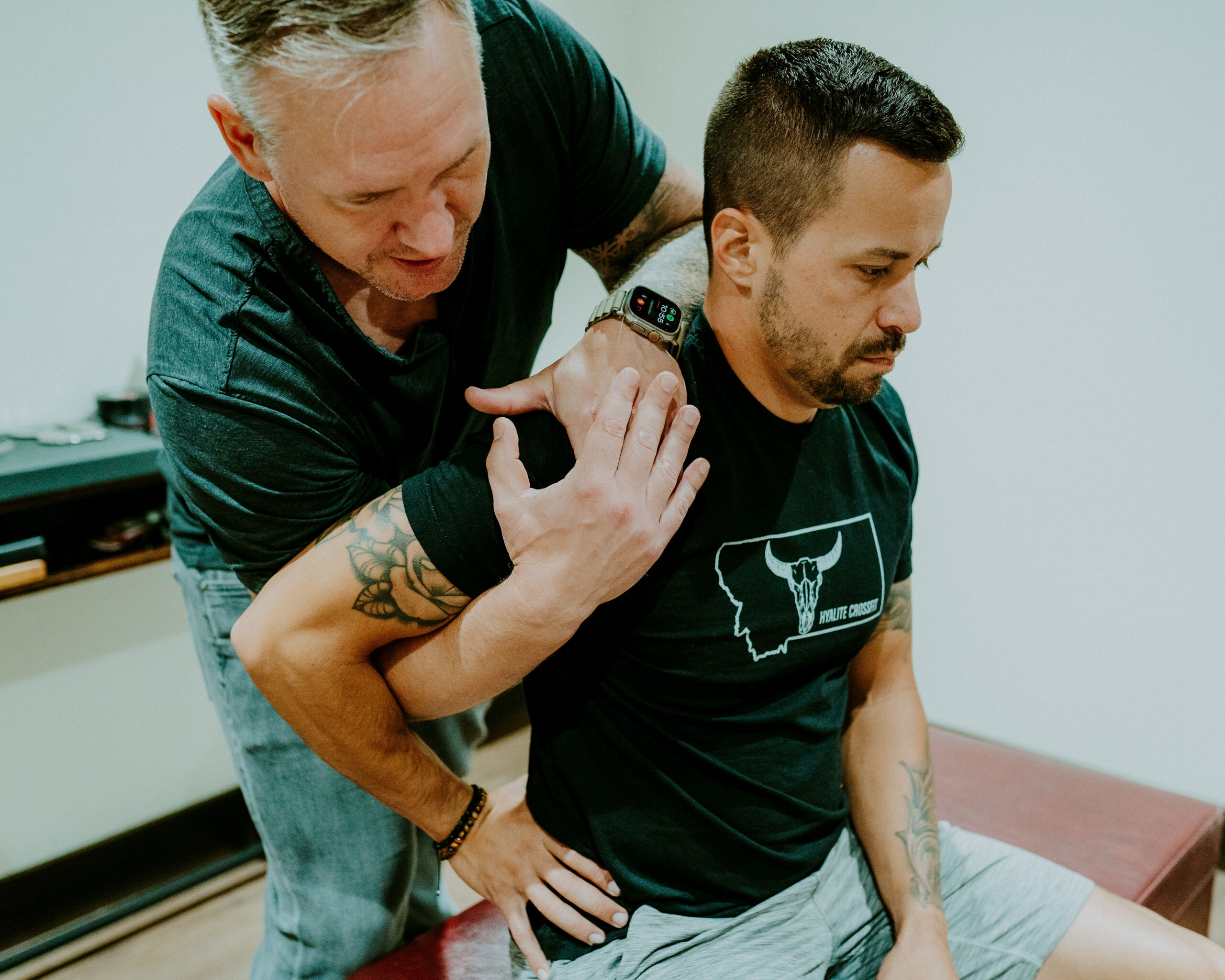
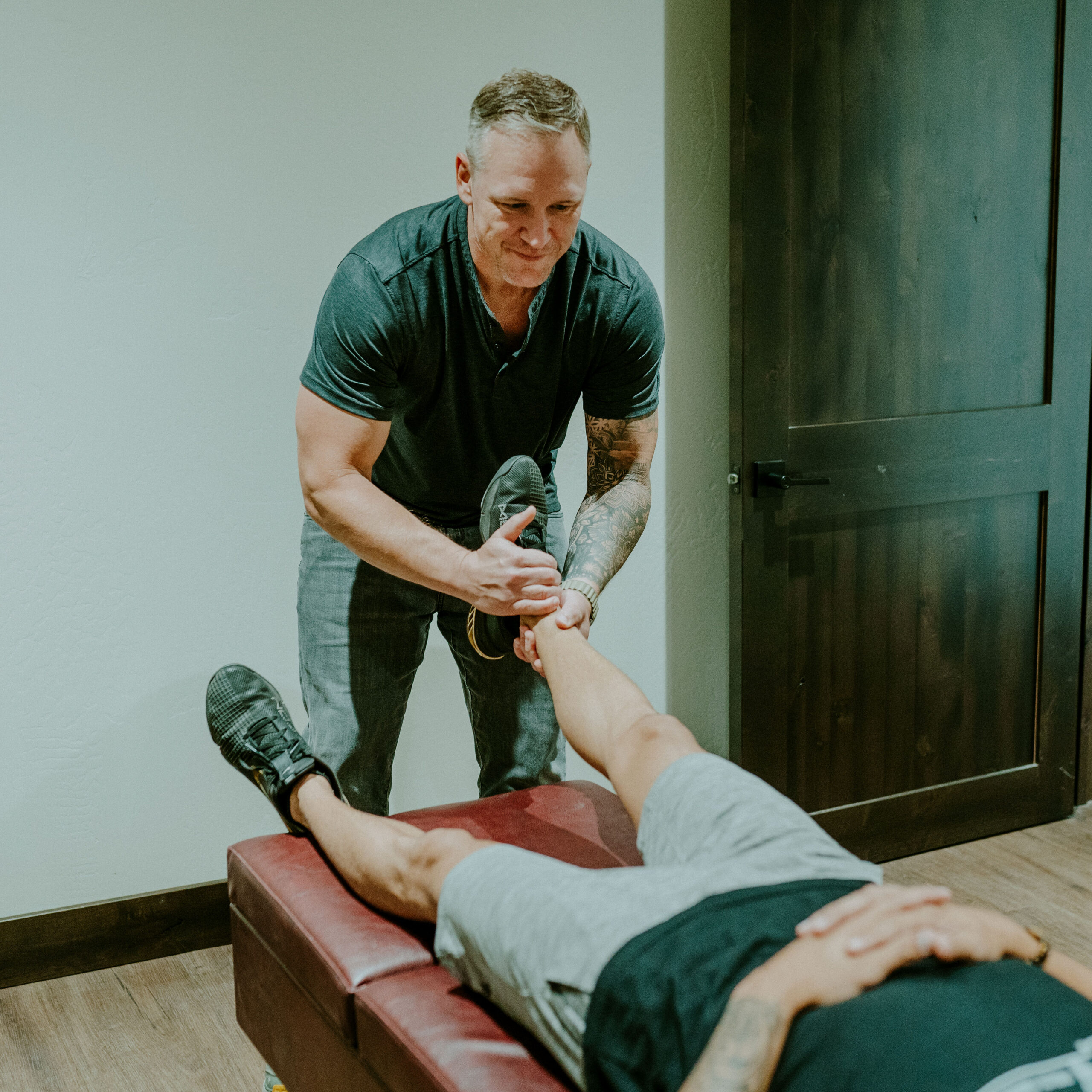
The contact and patient position change with the region being assessed. These images show several examples of hands-on care at Windy Ridge.
Related services
Your provider may recommend one or more complementary approaches when they fit your examination and goals.
Relevant providers
Windy Ridge offers hands-on chiropractic care across active adult, family-centered, pregnancy, postpartum, and pediatric needs.
Movement-focused care for active adults, soft tissue needs, and patients seen between Four Corners and Big Sky.
Hands-on chiropractic care for active patients, everyday movement goals, and Four Corners patients.
Pregnancy, postpartum, pediatric, and family-centered care using approaches matched to each stage and patient.
Frequently asked questions
It is a hands-on chiropractic approach that uses specific contacts and controlled manual forces to address restricted joint motion in the spine, pelvis, or extremities.
No. Position, direction, speed, and force are adapted to the joint being treated, your comfort, your goals, and your provider’s clinical findings.
Yes, when clinically appropriate. Your provider may assess joints such as the shoulder, elbow, wrist, hand, hip, knee, ankle, or foot if they relate to your movement or symptoms.
Soft tissue techniques may be used before or after an adjustment when muscle or tissue restriction affects comfortable movement. The combination depends on your examination and plan.
Your provider will review your history and goals, perform a focused examination, explain the findings, and discuss whether adjusting or another approach is appropriate before treatment begins.
A practical next step
If hands-on chiropractic care sounds like a useful fit, schedule a visit or use Find Your Fit to choose a provider based on your goals and location.