
Consistent Contact
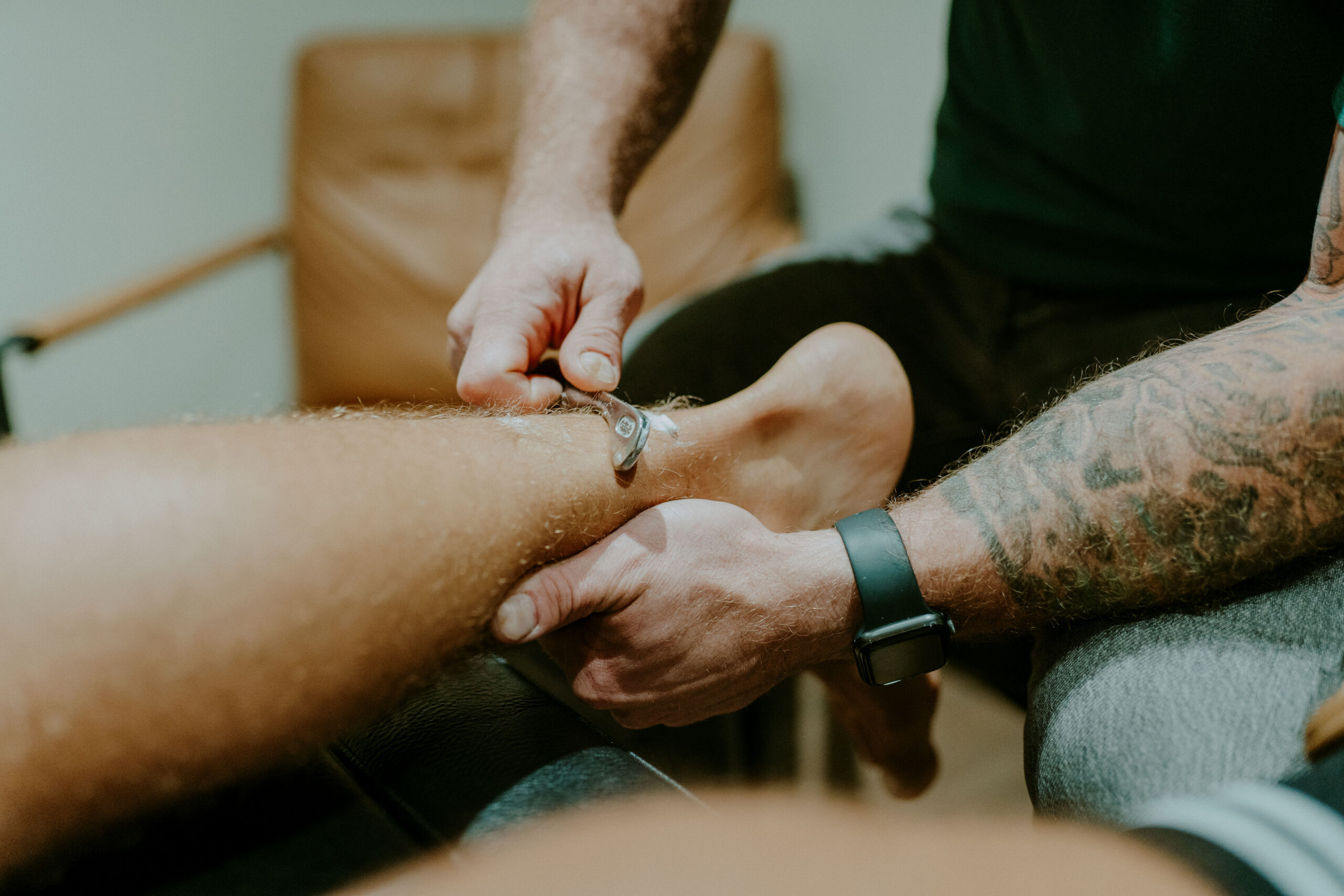
A shaped edge can maintain steady contact over a defined area while the provider controls direction and pressure.



Instrument-Assisted Soft Tissue Mobilization
Focused soft tissue care using specialized instruments to address restriction, tissue quality, and movement limitations.
IASTM gives the provider a shaped tool for applying controlled pressure across selected soft tissue. The technique is adjusted to the patient rather than used as an aggressive, one-setting treatment.
Understanding the technique
IASTM stands for instrument-assisted soft tissue mobilization. It uses shaped instruments to apply and control pressure over a selected tissue area.
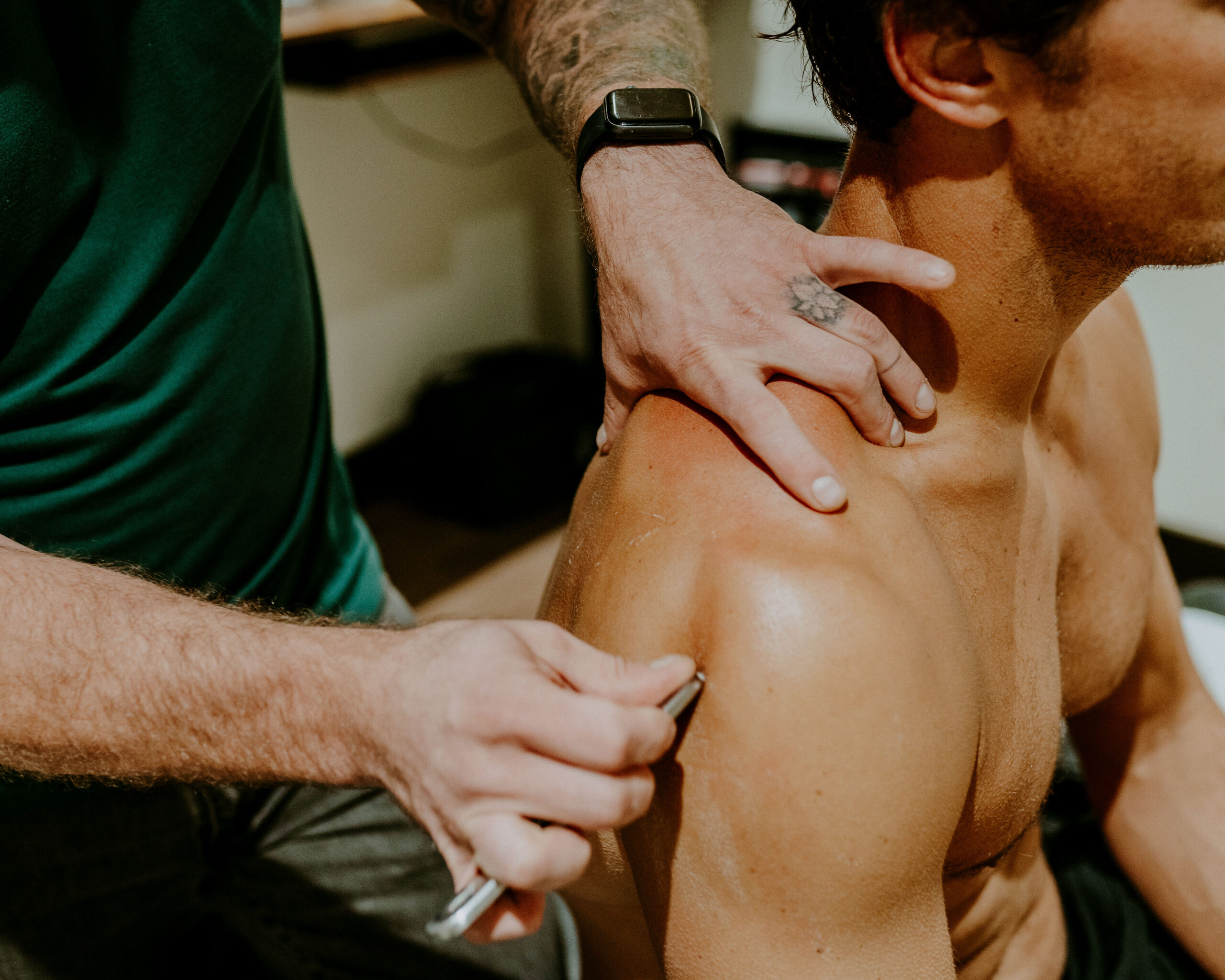
The instrument’s edges and curves help a provider maintain consistent contact across different body contours. The tool can also help the provider notice changes in tissue texture or sensitivity while working.
The goal is not to scrape as hard as possible or promise that tissue is being mechanically “broken up.” Pressure, angle, speed, and treatment time should be adjusted to your tolerance and clinical findings.
IASTM may be used to address tissue sensitivity, support soft tissue mobility, reduce perceived restriction, and improve tolerance to movement when clinically appropriate.
A different type of contact
Hands-on soft tissue care and IASTM can both be useful. The instrument simply offers another way to assess and load tissue.
A shaped edge can maintain steady contact over a defined area while the provider controls direction and pressure.
The technique can range from light to more focused contact. Your response should guide how much pressure is used.
After working on an area, the provider can reassess motion or a task to decide whether the approach supported the visit goal.
From assessment to movement
IASTM is most useful when it serves a clear purpose within the examination and treatment plan.
Your provider identifies a tissue region relevant to your movement, sensitivity, or clinical findings.
Pressure, angle, direction, and treatment time are modified according to the area and your feedback.
Movement, exercise, chiropractic adjusting, or another soft tissue technique may follow when it supports the plan.
During and after care
IASTM should be purposeful and tolerable. More pressure is not automatically better.
You may feel firm pressure, a pulling sensation, or tenderness over a sensitive area. Give your provider real-time feedback.
Skin redness can occur because of local mechanical stimulation and increased surface circulation. It should not be treated as the goal of care.
Your provider may change the area, pressure, duration, or next treatment step based on comfort and movement response.
Applied across different regions
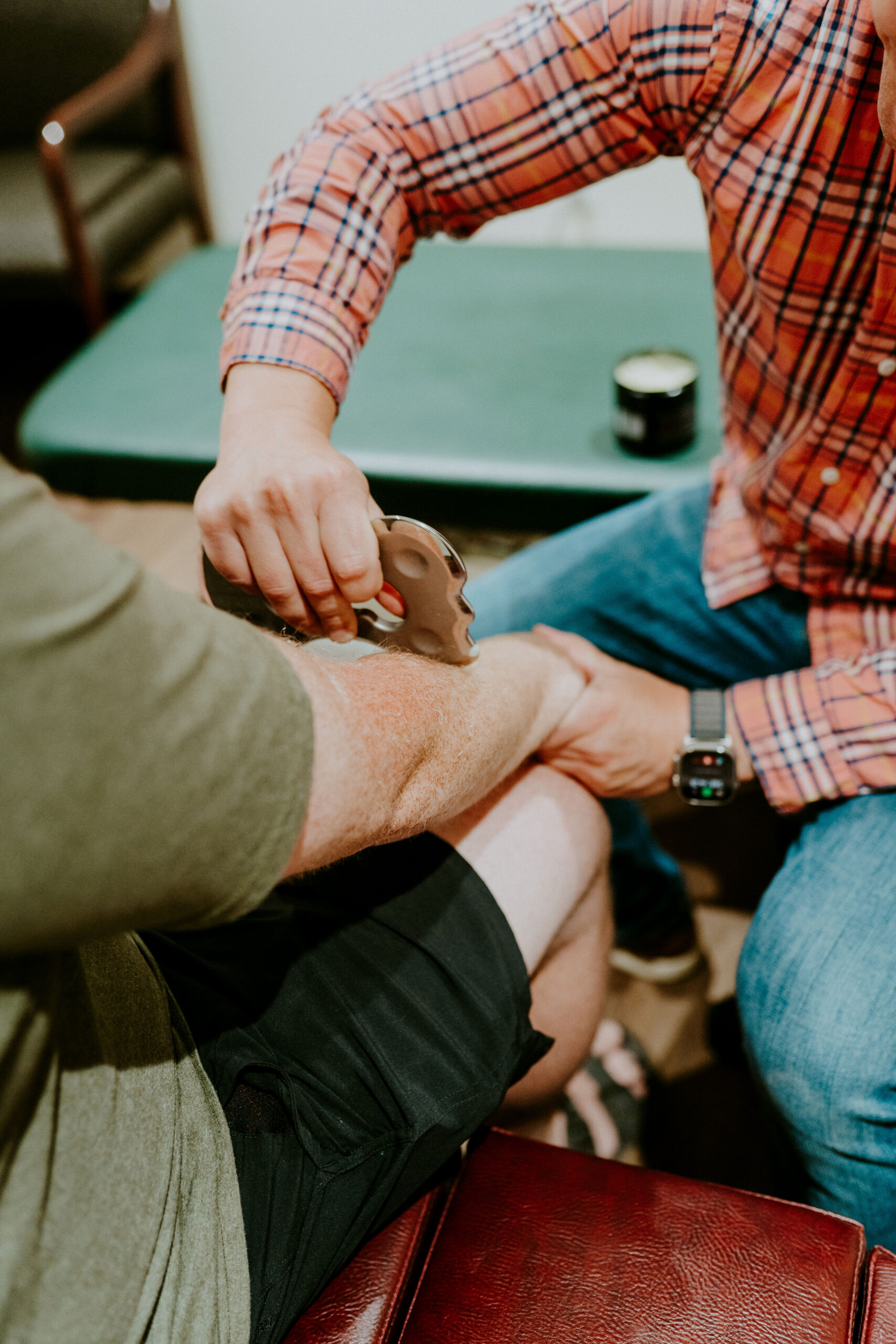
The instrument shape and treatment setup can change for the shoulder, calf, forearm, or another clinically relevant region.
Related services
Your provider may recommend a different technique or a combination based on your findings.
Relevant providers
Technique and provider availability can vary. Start with the provider whose clinical focus and location best fit your needs.
Use Find Your Fit or review the team. Your provider can determine whether IASTM or another approach is most appropriate after an evaluation.
Frequently asked questions
IASTM stands for instrument-assisted soft tissue mobilization, a technique that uses shaped instruments to apply controlled pressure over selected tissue.
An instrument can provide consistent contact over different body contours and gives the provider another way to assess and load a tissue area.
You may feel firm pressure or tenderness, but the technique should be adjusted to your tolerance. Tell your provider if the pressure feels excessive.
Temporary redness can occur from mechanical stimulation and increased surface circulation. Redness is not required for the treatment to be useful.
It may be followed by movement, exercise, chiropractic adjusting, or another soft tissue approach when those steps fit the examination and plan.
A focused next step
Schedule an evaluation or contact Windy Ridge with questions about the technique, provider routing, or what to expect.